
Last technically reviewed: October 2026 · By the PartnerPPE product team
In short
- EU Directive 2003/10/EC sets three exposure values. The lower action value is 80 dB(A), the upper action value is 85 dB(A), and the exposure limit is 87 dB(A). The limit value takes the hearing protector into account; the action values do not.
- Earmuffs are certified to EN 352-1, earplugs to EN 352-2, and helmet-mounted earmuffs to EN 352-3. The series was revised in 2020 and now has ten parts, including electronic and audio variants.
- The SNR (Single Number Rating) and the H/M/L values come from laboratory attenuation tests. A simple estimate of the level at the ear is the C-weighted noise level minus the SNR.
- The UK Health and Safety Executive (HSE) advises derating protectors by 4 dB for real-world use and avoiding protectors that bring the level at the ear below 70 dB.
- The US NRR is a separate rating made under EPA rules (40 CFR Part 211) using ANSI S3.19-1974. It is not interchangeable with the SNR.
What is EN 352?
EN 352 is the European series of standards for hearing protectors. Each part sets construction, performance, marking and user-information requirements for one type of protector. The 2020 revision replaced the earlier editions and expanded the series. The supporting test methods are published separately as EN 13819-1 (physical tests) and EN 13819-2 (acoustic tests), and these were also reissued in 2020.
| Part | Covers |
|---|---|
| EN 352-1:2020 | Earmuffs (headband or neckband) |
| EN 352-2:2020 (+A1:2024) | Earplugs: disposable foam, reusable and banded |
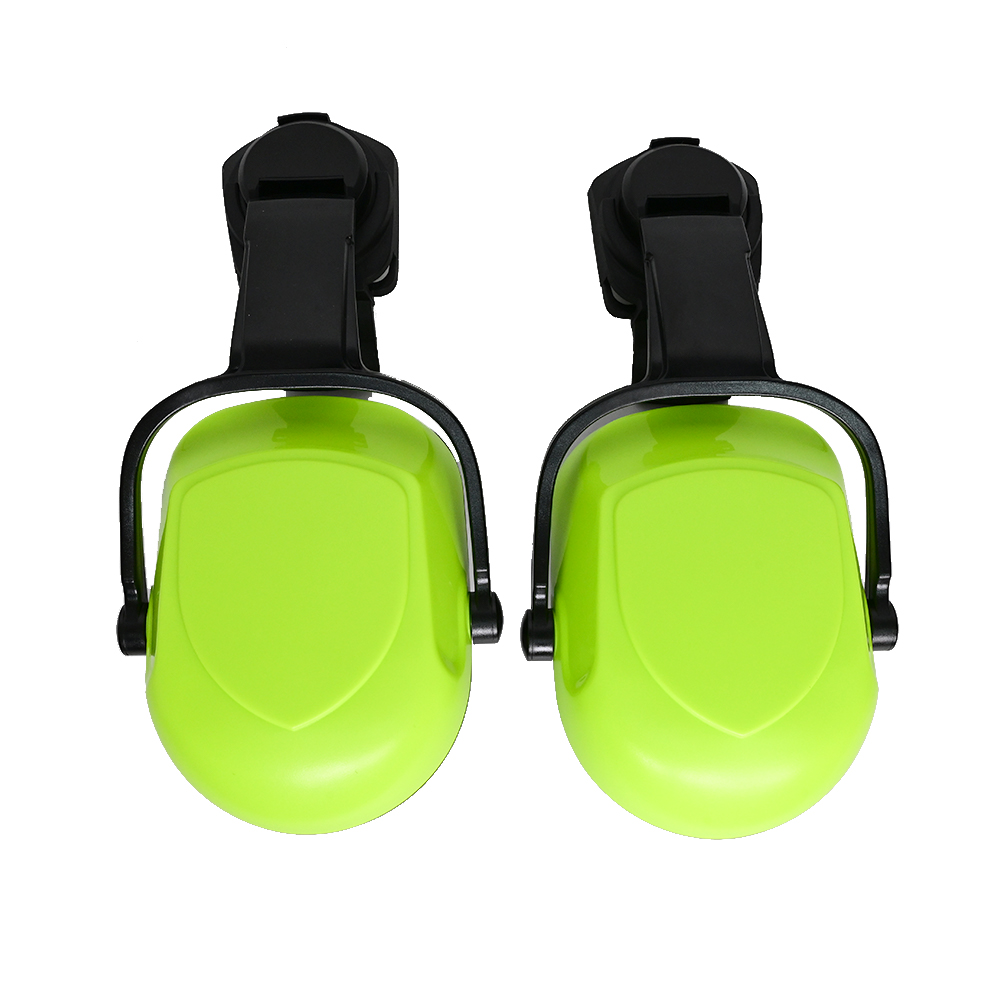
| EN 352-3:2020 | Earmuffs attached to head and/or face protection, such as helmet-mounted earmuffs |
| EN 352-4 | Level-dependent earmuffs |
| EN 352-5 | Active noise reduction earmuffs |
| EN 352-6 | Earmuffs with safety-related audio input |
| EN 352-7 | Level-dependent earplugs |
| EN 352-8 to -10 | Entertainment-audio earmuffs and further electronic earplug variants |
The 2020 revision of EN 352-3 widened its scope beyond industrial helmets. It now also covers earmuffs fitted to mountaineering helmets, rigid head tops of powered respirators, and face shields. It also changed how combinations of muff and helmet are assessed across small, medium and large head sizes. When you buy helmet-mounted muffs, check that your exact helmet model is listed as a tested combination in the user information.
SNR and H/M/L explained
Attenuation is measured on human test subjects in a laboratory, octave band by octave band. From those results, EN ISO 4869-2 derives the following figures:
- SNR (Single Number Rating): one figure in dB, subtracted from the C-weighted noise level (LC) to estimate the A-weighted level at the ear.
- H, M and L: attenuation values for noise dominated by high, medium and low frequencies. They are used with both the C- and A-weighted noise levels for a better estimate, and they matter most for low-frequency noise from compressors, generators, engines and press shops.
Worked example (SNR method): In a workshop measured at 98 dB(C), an earmuff with SNR 30 gives about 98 − 30 = 68 dB(A) at the ear. Applying the HSE 4 dB real-world derating gives about 72 dB(A), which is below the 80 dB(A) lower action value and not overprotective.
EU noise exposure values (Directive 2003/10/EC)
| Value | Daily exposure LEX,8h | Peak | Employer duty (summary) |
|---|---|---|---|
| Lower exposure action value | 80 dB(A) | 135 dB(C) | Make hearing protectors available |
| Upper exposure action value | 85 dB(A) | 137 dB(C) | Hearing protectors must be used, and a noise-control programme applies |
| Exposure limit value | 87 dB(A) | 140 dB(C) | Must not be exceeded at the ear, after taking the protector into account |
Matching SNR to the noise level
More attenuation is not always better. HSE warns that protectors which bring the level at the ear below 70 dB can isolate workers, make warning signals and speech hard to hear, and lead people to remove the protection. HSE gives this rough guide for selection:
| Noise level during the task | Suggested SNR |
|---|---|
| 85–90 dB | 20 or less |
| 90–95 dB | 20–30 |
| 95–100 dB | 25–35 |
| 100–105 dB | 30 or more |
HSE notes that this table is an approximation. It does not apply where noise has strong low-frequency content; in that case, use the H/M/L or octave-band method.
SNR vs NRR
| Point | SNR (Europe) | NRR (United States) |
|---|---|---|
| Basis | EN ISO 4869 test and calculation, within the EN 352 series | EPA labelling rule, 40 CFR Part 211, with testing to ANSI S3.19-1974 |
| Used with | C-weighted level (SNR) or C and A levels (H/M/L) | C-weighted level directly. With A-weighted data, OSHA guidance subtracts 7 dB. |
| Real-world derating | HSE: 4 dB | OSHA: 50% as a rule of thumb. NIOSH: earmuffs 25%, formable earplugs 50%, other earplugs 70%. |
The SNR and NRR come from different test procedures and must not be converted one into the other. For export orders, ask for the rating required by the destination market.
How to choose
- Intermittent noise, frequent removal (maintenance and inspection): earmuffs or banded earplugs, which are quick to put on and take off.
- Continuous noise, long shifts, hot climates: foam or reusable earplugs are cooler than earmuffs. Train workers in correct insertion.
- Workers already wearing a helmet: EN 352-3 helmet-mounted earmuffs tested with that helmet model.
- Need to hear radios or warnings: level-dependent (EN 352-4) or audio-input (EN 352-6) earmuffs.
- Very high noise (above about 105 dB): get specialist advice. Earplugs plus earmuffs may be needed, and the combined attenuation is much less than the sum of the two SNRs.
Frequently asked questions
Is a higher SNR always better?
No. Choose an SNR that brings the level at the ear below 80 dB(A) but not far below 70 dB. Overprotection reduces communication and leads to protectors being removed.
Can I compare a US NRR 33 earplug with an SNR 37 earplug?
Not directly. The two ratings use different test methods and calculations, so compare products within the same rating system.
What changed in EN 352 in 2020?
The parts were reissued as 2020 editions, and the companion test-method standards EN 13819-1 and -2 were reissued alongside them. The scope of EN 352-3 widened to cover more head and face protection carriers, and the series expanded to ten parts covering electronic and audio protectors. Several parts have since received 2024 amendments.
Can PartnerPPE supply earmuffs and earplugs to EN 352?
Yes. We supply headband, neckband and helmet-mounted earmuffs and earplugs made to EN 352 requirements, with SNR ranges to suit different noise levels. We can provide test reports for certified models on request and arrange third-party testing for OEM orders. Hearing protection can be combined with helmets, eyewear and gloves in one shipment. See our earmuffs and hearing protection or tell us your noise levels and target market.
Sources: Directive 2003/10/EC, Article 3; EN 352-1:2020, EN 352-2:2020+A1:2024, EN 352-3:2020 and related parts; EN 13819-1/-2:2020; EN ISO 4869-2; Commission Implementing Decision (EU) 2026/1279; HSE guidance on hearing protection and overprotection; 40 CFR Part 211 and ANSI S3.19-1974; OSHA and NIOSH derating guidance; 3M technical bulletin on EN 352:2020. This article is a buyer’s summary, not a substitute for the standard text or a workplace noise assessment.