
Last technically reviewed: October 2026 · By the PartnerPPE product team
In short
- EN 397 covers industrial safety helmets and tests impact on the crown only. In the 2012 edition, optional markings are −20 °C or −30 °C, +150 °C, 440 Vac, LD (lateral deformation) and MM (molten metal).
- EN 397:2025 is cited as a harmonised standard in the EU’s June 2026 list. It introduces Type 1 (crown impact, 49 J) and Type 2 (crown impact around 98 J plus off-crown impact at 24.5 J). The EN 397:2012+A1:2012 reference is withdrawn on 16 December 2027.
- EN 14052 covers high-performance industrial helmets: 100 J crown impact plus 50 J off-crown impacts at the front, rear and sides.
- ANSI/ISEA Z89.1 Type I protects against top impact, and Type II against top and lateral impact. Class G is proof-tested at 2,200 V, Class E at 20,000 V, and Class C gives no electrical protection.
- ANSI/ISEA Z89.1-2026, published September 2026, keeps Types and Classes and adds optional Type I+ and Type II+ designations, which add chin-strap and retention requirements.
What is EN 397?
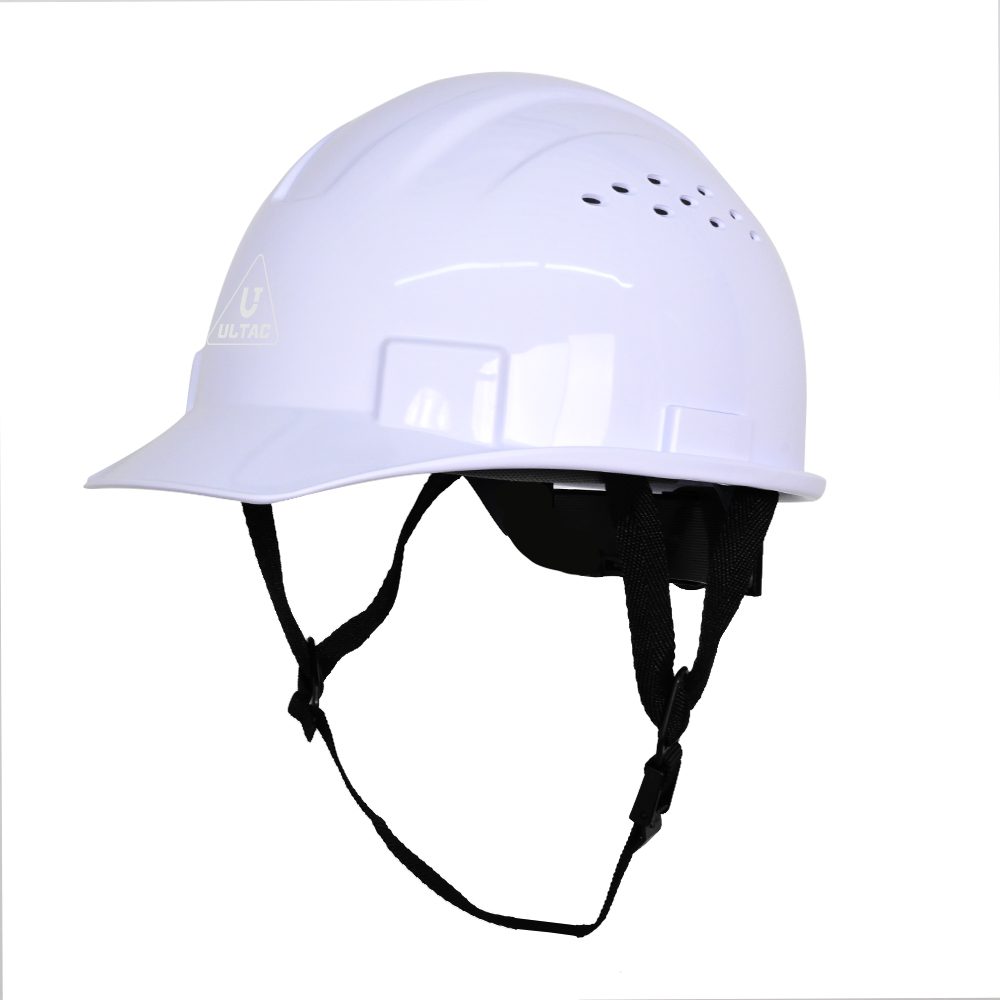
EN 397 is the European standard for industrial safety helmets, the standard hard hat worn on construction sites, in factories and in warehouses. It is designed mainly to protect against objects falling on the top of the head. The 2012 edition (EN 397:2012+A1:2012) is still the most common marking on helmets in circulation. Under it, every helmet must pass these mandatory tests:
- Shock absorption: a 5 kg striker hits the crown with about 49 J, and the force transmitted to the headform must not exceed 5 kN.
- Penetration resistance against a pointed striker.
- Flame resistance.
- Chin-strap anchorage: if a chin strap is fitted, its anchorages must release between 150 N and 250 N, so the strap cannot become a strangulation hazard.
| EN 397:2012 optional marking | Meaning |
|---|---|
| −20 °C or −30 °C | Passes impact and penetration tests after very-low-temperature conditioning |
| +150 °C | Passes after very-high-temperature conditioning |
| 440 Vac | Electrical insulation: protects against brief accidental contact with live conductors up to 440 V a.c. |
| LD | Lateral deformation: limited deformation under side crush (430 N) |
| MM | Molten metal splash resistance |
EN 397:2025: what changes
EN 397:2025 is cited in the EU list of harmonised PPE standards, Commission Implementing Decision (EU) 2026/1279 of June 2026. The old EN 397:2012+A1:2012 reference is withdrawn on 16 December 2027. Helmets already certified to the 2012 edition can stay on the market until their EU type-examination certificate expires. The main changes are:
- Type 1 covers crown impact only, which is broadly equivalent to the 2012 edition. A chin strap is optional.
- Type 2 adds off-crown (front, rear and side) impact and a higher-energy crown test. It requires a factory-fitted chin strap.
- The LD test and the 440 Vac option are removed. Electrical insulation claims now go through EN 50365:2023, the standard for electrically insulating helmets for live working, and vented helmets cannot claim it.
- The +150 °C and molten metal options remain. New options include off-crown penetration, enhanced visibility and electrostatic-dissipative performance for ATEX areas.
EN 397 vs EN 14052
| Requirement | EN 397:2012 | EN 397:2025 Type 2 | EN 14052:2012+A1:2012 |
|---|---|---|---|
| Crown impact energy | ≈ 49 J | ≈ 98 J | 100 J |
| Off-crown impact | Not tested | 24.5 J (front, rear, sides) | 50 J (inclined up to 60°) |
| Off-crown penetration | Not tested | Optional | Tested |
| Chin strap | Optional | Mandatory | Retention system tested |
EN 14052 helmets are aimed at higher-energy hazards such as heavy falling objects, work at height and confined spaces. EN 12492, now in its 2025 edition, covers mountaineering helmets. These are sometimes used for rope access and work at height because they have a secure chin strap, but they are not industrial helmets by default.
What is ANSI/ISEA Z89.1?
ANSI/ISEA Z89.1 is the American National Standard for industrial head protection, referenced by OSHA. It rates helmets on two axes: Type for impact and Class for electrical protection.
| Designation | What it means |
|---|---|
| Type I | Reduces the force of impact to the top of the head |
| Type II | Reduces the force of impact to the top and sides of the head |
| Class G (General) | Proof-tested at 2,200 V |
| Class E (Electrical) | Proof-tested at 20,000 V |
| Class C (Conductive) | No electrical protection (often vented) |
The 2014 edition (reaffirmed in 2019) was the reference for over a decade. ANSI/ISEA Z89.1-2026, published in September 2026, keeps Type I/II and Class G/E/C and adds two optional designations. Type I+ adds chin-strap performance, retention testing and front, rear and side impact. Type II+ adds chin-strap and retention requirements to Type II. The former “HV” high-visibility marking becomes “EV” (enhanced visibility), and the optional low- and high-temperature markings (LT, HT) remain. Helmets certified to the 2014 edition are not made obsolete by the new edition.
How to choose
- General construction and factory work, EU-style specification: EN 397, or EN 397:2025 Type 1. Add −30 °C for cold regions and 440 Vac (2012) or EN 50365 for electrical work.
- Work at height, scaffolding and steel erection: Lateral impact and a secure chin strap matter. Specify EN 397:2025 Type 2, EN 14052, or ANSI Type II.
- Utilities and electrical contractors (US-style specification): ANSI Type I or II, Class E.
- Foundries and steel mills: EN 397 with MM and +150 °C, combined with a suitable face shield.
- Hot climates (Middle East, Africa): Vented shells improve comfort, but vented helmets cannot carry electrical insulation claims. Choose according to the electrical risk.
Service life and inspection
Helmet shells and harnesses age through UV exposure, heat, chemicals and impacts. Follow the manufacturer’s stated service life, which is usually counted from the moulding date marked inside the shell. Inspect before each use for cracks, chalky or faded surfaces, brittleness and harness damage. Replace any helmet that has taken a significant impact, even if no damage is visible. Do not paint, drill or apply solvent-based stickers unless the manufacturer allows it.
Frequently asked questions
Is EN 397 the same as ANSI Type I?
Both focus on top impact, but the test methods, energies and markings differ. A helmet must be certified to each standard it claims.
Are EN 397:2012 helmets still legal to sell?
Yes, while their EU type-examination certificate is valid. The 2012 reference provides presumption of conformity until 16 December 2027. New designs are moving to EN 397:2025.
What does Class E mean on a hard hat?
Under ANSI/ISEA Z89.1, Class E helmets are proof-tested at 20,000 V to reduce the danger from contact with high-voltage conductors. Class G helmets are proof-tested at 2,200 V.
Can PartnerPPE supply safety helmets to EN 397, EN 14052 or ANSI/ISEA Z89.1?
Yes. We supply industrial safety helmets made to EN 397 and ANSI/ISEA Z89.1 requirements, as well as high-performance helmets, in your colours and with your logo printing. We can provide test reports for certified models on request and arrange third-party testing for OEM orders. Helmets can ship with gloves, eyewear, hearing protection and EN ISO 20345 safety shoes in one consolidated order. See our safety helmets or contact our team.
Sources: EN 397:2012+A1:2012; EN 397:2025; EN 14052:2012+A1:2012; EN 50365:2023; EN 12492:2025; Commission Implementing Decision (EU) 2026/1279; ANSI/ISEA Z89.1-2014 (R2019) and ANSI/ISEA Z89.1-2026 (ISEA release coverage); JSP and Aresta technical guidance. This article is a buyer’s summary, not a substitute for the standard text. Always follow the helmet manufacturer’s instructions on fit, inspection and replacement.